From one world to another
Foreword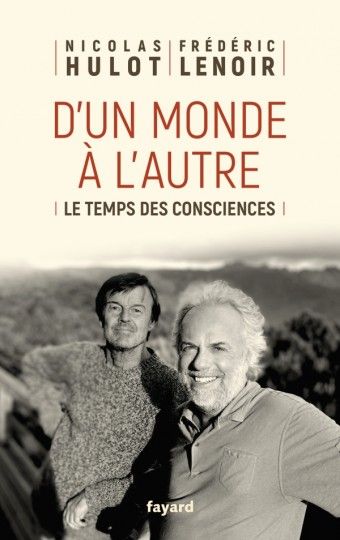
Foreword
"Sir and dear elephant,
"I have a feeling that our destinies are linked. And yet you are considered incompatible with the current era.".
“If the world can no longer afford the luxury of this natural beauty, it will soon succumb to its own ugliness and be destroyed by it. There is no doubt that your disappearance will signify the beginning of a world entirely made for Man. But let me tell you this, my old friend: in a world entirely made for Man, there might well be no place for Man either.”.
"You are our last vestige of innocence.".
"And so, sir and dear elephant, we find ourselves, you and I, on the same boat, driven towards oblivion by the same wind of absolute rationalism. In a truly materialistic and realistic society, poets, writers, artists, dreamers, and elephants are nothing more than nuisances."
In March 1968, Romain Gary wrote this moving Letter to the Elephant, excerpts of which we quote here. The situation has only worsened since then. It is precisely because we refuse to accept this inevitability that we decided to write this book in two voices. We intend to be among those "disruptors" who denounce a system gone mad and the logic that drives it. It is extremely difficult to bring about change within the framework of political power, given the immense mental and economic resistance. To make the necessary ecological and social transition possible, what we need first and foremost is a new perspective and a profound transformation of minds.
Beyond the suffering it inflicts, may we see the current crisis as an opportunity that helps us change our perspective on the world and modify our behavior. May we not simply return to business as usual, in the same frenzied consumerism and destruction of the planet's ecosystems. May we be united and stand in solidarity during this period of resilience that lies ahead, so that we may address the root causes of the crisis we are experiencing. In just a few weeks, this crisis has led governments around the world to take measures that previously seemed unimaginable, measures that have shattered the economic dogmas these same governments considered sacrosanct. The ecological challenge demands that we think differently and revise all our habits, certainties, and lifestyles, as the 150 randomly selected members of the Citizens' Convention for Climate have clearly understood—and this is an encouraging sign. May we, together, transition from one world to another.
This pandemic has at least reminded us of our extreme fragility. We thought ourselves all-powerful masters and possessors of nature, and nature reminds us, with a simple virus, just how powerless and helpless we are. We thought that the globalization of the world, under the aegis of triumphant liberalism, was a force, and we are realizing that it makes us extremely vulnerable. This pandemic is probably only the prelude to many other possible disasters if we continue down this same absurd path of infinite growth in a finite world, of plundering and destroying the planet at the expense of natural balances, of global competition at the expense of social equilibrium.
As long as we continue to think and act as before, nothing will be possible, and we will lurch from one ecological disaster to another, from one health crisis to another, and from one social crisis to another. Like many, we yearn for a different world, one that is both more humane and more respectful of nature. A world founded not on strength and competition, but on humility and collaboration. A more equitable, more fraternal world, more connected to the Earth. A world where profound joys are more desired than fleeting pleasures. A world where religious beliefs and cultural backgrounds are no longer barriers between individuals. A world where money is less coveted than the warmth of an embrace or the sharing of a smile. A world where elephants and poets still have their rightful place.
This other world is not a utopia. But it can only come about through "a global revolution of human consciousness," as Vaclav Havel wrote, which will transform our ways of life. This is the subject of this book, the fruit of more than a year's work. It begins with the question of progress—what constitutes true progress for humankind?—and leads to the question of meaning: why live, and on what values should we base our individual and collective existence? Between this opening chapter and the final chapter, we address the major themes that shape our lives and where current obstacles lie, but also the keys to change: pleasure and desire, the economy, politics, individual interest and the common good, unity and diversity, the real and the virtual, being and having. We have combined our reflections with our experiences, drawn from so many encounters. Far from any incantatory or catastrophist spirit, throughout this book we propose principles and values that outline the contours of the world to which we aspire, but also realistic and concrete proposals that would allow us to carry out this necessary transformation without further delay.