
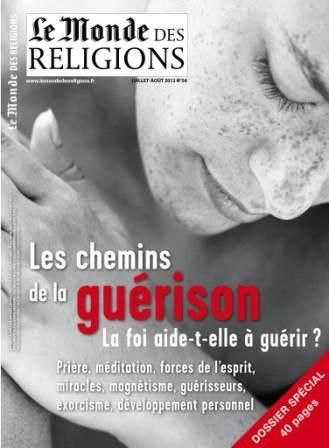
 The World of Religions No. 54 – July/August 2012 —
A growing body of scientific research demonstrates the correlation between faith and healing, confirming observations made since time immemorial: the thinking animal that is humankind has a different relationship to life, illness, and death, depending on its level of faith. From self-confidence, trust in one's therapist, in science, in God, and even the placebo effect, a crucial question arises: does belief help one heal? What influence does the mind—through prayer or meditation, for example—have on the healing process? How important can the doctor's own convictions be in their relationship of care and support for the patient? These important questions shed new light on essential questions: What is illness? What does "healing" mean?
Ultimately, healing is always a process of self-healing: it is the body and mind of the sick person that bring about healing. It is through cellular regeneration that the body regains a balance it had lost. It is often helpful, even necessary, to support the ailing body through therapeutic intervention and medication. But these only assist the patient's self-healing process. The psychological dimension, faith, morale, and the relational environment also play a crucial role in this healing process. Therefore, the whole person is involved in the healing process. The balance of body and mind cannot be restored without a genuine commitment from the sick person to regaining their health, without trust in the care they receive, and perhaps, for some, trust in life in general or in a benevolent higher power that assists them. Similarly, sometimes a cure—that is, a return to balance—cannot occur without a change in the patient's environment: their pace and lifestyle, their diet, their breathing or body care routines, and their emotional, friendly, and professional relationships. Many illnesses are the local symptom of a more global imbalance in the patient's life. If the patient remains unaware of this imbalance, they will stumble from one illness to another, or suffer from chronic diseases, depression, and so on.
What the paths to healing teach us is that we cannot treat a human being like a machine. We cannot heal a person like we repair a bicycle, by changing a bent wheel or a flat tire. It is the social, emotional, and spiritual dimensions of the individual that are expressed in illness, and it is this holistic dimension that must be taken into account in order to heal them. As long as we haven't truly integrated this, there's a good chance that France will remain the world champion in the consumption of anxiolytics and antidepressants, and in the deficit of its social security system, for a long time to come.