Essay
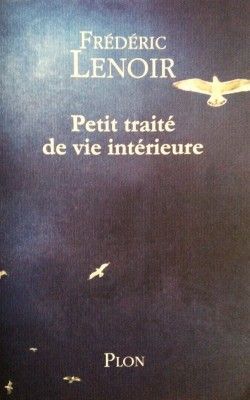 Plon, November 2010
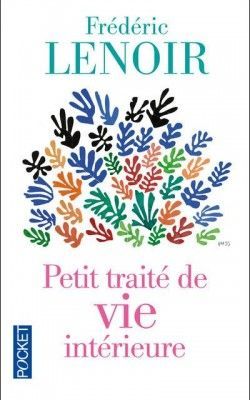
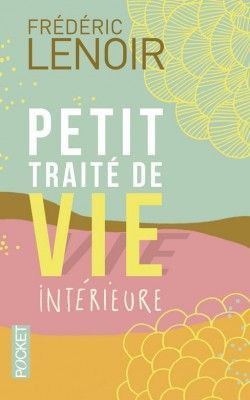
Presentation
“Of all my books on philosophy and spirituality, this one is certainly the most accessible, but undoubtedly also the most useful. For it is not theoretical knowledge that I seek to impart, but practical knowledge, the most essential of all: how to lead a good, happy life, in harmony with oneself and with others. What I say here, in simple words and with concrete examples, as in a conversation with a friend, is the fruit of thirty years of research and experience. My personal testimony would matter little if it were not illuminated by the thought of the philosophers and sages of humanity who have marked my life: the Buddha, Confucius, Socrates, Aristotle, Epicurus, Epictetus, Jesus, Montaigne, Spinoza, Schopenhauer, Levinas, among others. To exist is a fact, to live is an art. The whole journey of life is about moving from ignorance to knowledge, from fear to love.” FL
Translations – other editions
Germany: DEUTSCHER TASCHENBUCH VERLAG
Brazil: EDITORIAL OBJETIVA
China: PHOENIX-HANZHANG PUBLISHING
Korea: CHANG HAE PUBLISHING CO.
Croatia: TIM Press doo
Spain: EDITORIAL KAIROS
France: AUDIOLIB
France: FRANCE LOISIRS
France: LES EDITIONS A VUE D'ŒIL
Italy: ARNOLDO MONDADORI EDITORE
Japan: KASHIWASHOBO PUBLISHING Co
Netherlands: UITGEVERIJ TEN HAVE
Romania: Paralela 45
Turkey: APRIL PUBLISHING Ltd
Table
Prologue
Chapter 1. Saying “Yes” to Life
Chapter 2. Trust and Letting Go
Chapter 3. Taking Responsibility for Your Life
Chapter 4. Action and Non-Action
Chapter 5. Silence and Meditation
Chapter 6. Knowledge and Discernment
Chapter 7. Know Thyself
Chapter 8. Acquiring Virtues
Chapter 9. Becoming Free
Chapter 10. Self-Love and Inner Healing
Chapter 11. The Golden Rule
Chapter 12. Love and Friendship Chapter
13. Non-Violence and Forgiveness
Chapter 14. Sharing
Chapter 15. Attachment and Non-Attachment
Chapter 16. Adversity is a Spiritual Teacher
Chapter 17. “Here and Now”
Chapter 18. Taming Death
Chapter 19. Humor
Chapter 20. Beauty
Epilogue
Addendum: What is a successful life? An unpublished dialogue between Socrates and Jacques Séguéla
Acknowledgments
Prologue
To exist is a fact, to live is an art.
We did not choose to live, but we must learn to live as we learn to play the piano, to cook, to sculpt wood or stone. This is the role of education. Yet, education is increasingly less concerned with transmitting a way of being, in favor of a know-how. It aims more to enable us to face the external challenges of existence than the internal ones: how to be at peace with ourselves and with others? How to react to suffering? How to know ourselves and resolve our own contradictions? How to acquire true inner freedom? How to love? How, ultimately, to access true and lasting happiness, which undoubtedly depends more on the quality of our relationship with ourselves and others than on social success and the acquisition of material goods?
For millennia, religion fulfilled this role of educating the inner life. It is clear that it is fulfilling it less and less. Not only because it has, at least in Europe, far less influence on people's consciences, but also because it has become rigid. It most often offers dogma and norms when individuals are searching for meaning. It dictates creeds and rules that resonate only with a minority of believers, and it fails to renew its perspective, its language, its methods, to touch the souls of our contemporaries who nevertheless continue to question the enigma of their existence and how to lead a good life. Caught between a dehumanizing consumerist ideology and a stifling dogmatic religion, we turn to philosophy and the great currents of wisdom of humankind. For the sages of the world—from Confucius to Spinoza, by way of Epicurus, Plotinus, and Montaigne—have bequeathed us keys to nurturing and developing our inner lives: accepting life as it is, knowing ourselves and learning to discern, living in the "here and now," self-mastery, inner silence, knowing how to choose, and forgiveness. These keys to universal wisdom have lost none of their relevance. They still help us to live, because while our world has changed greatly, the human heart remains the same. Although two thousand five hundred years old, the Buddha's diagnosis of what makes a person happy or unhappy remains true. Socratic observation that ignorance is the source of all evil is perfectly relevant today. Aristotle's teachings on virtue and friendship have not aged a day. The maxims of Epictetus, Seneca, and Marcus Aurelius on fate and free will continue to speak to us.
In my personal journey, my reading, from adolescence onward, introduced me to these masters of humanity's wisdom. It was they who instilled in me a taste for beauty, truth, and goodness—to borrow Plato's great archetypes. My studies in philosophy then allowed me to deepen my knowledge, but I also enriched my own inner journey with two other, quite different sources: spirituality and depth psychology. I discovered Buddhism at the age of sixteen, and the Buddha's teachings immediately resonated with me through their accuracy and pragmatism. I explored them further during an extended stay in India through encounters with Tibetan lamas, from whom I also learned the fundamentals of meditation. At the age of nineteen, reading the Gospels was also a profound experience. My discovery of Christ, not only as a teacher of the past but also as a living person to whom one can connect through prayer, profoundly marked my life and led me to an understanding of Christianity quite different from my childhood memories of catechism. Subsequently, my discovery of Freudian and Jungian psychoanalysis, as well as various therapeutic methods stemming from personal development (sophrology, Gestalt therapy, Rebirthing, etc.), helped me become more aware of my vulnerabilities and heal certain deep wounds that plagued my life and caused me to fall back into recurring neurotic patterns.
This short treatise is therefore the fruit of personal reflection, drawing on the philosophical wisdom traditions of East and West, Christian spirituality freed from its normative constraints, and depth psychology. My only ambition is to offer what has helped me to live and grow. To make this book accessible to a wider audience, I have chosen to structure it in two parts. It began as an oral teaching, and I later reworked the text, which nevertheless retains traces of that oral tradition. What I share here stems more from experience: first, the experience of the wise men who inspire me and whom I often quote, and then my own, which, despite considerable reluctance, I found difficult to avoid sharing. For how can one speak of the inner life without speaking of oneself? Let it be clear, however, that I in no way consider myself a role model: I still have my blind spots, and I don't always manage to put into practice the teachings I discuss here. What is certain is that I am now much more lucid, at peace, and, all things considered, happier than I have been in the past. May this little book help other troubled souls searching for light to understand that love is near, that inner freedom can come about, that joy is present. You only need to open the eyes of intelligence and heart to discover them.